
Relational Stress Mapping for High-Stakes Teams.

Workshop Overview
High-performing teams don’t break down because of lack of skill, intelligence, or commitment.
They break down because stress changes how nervous systems communicate.
Relational Stress Mapping for High-Stakes Teams is a live, facilitated workshop designed to help teams identify how stress disrupts communication, decision-making, and trust—and to install a shared repair framework that prevents the same conflicts from repeating.
This is not team bonding. It is not therapy. And it is not personality typing.
It is a precision-based, nervous-system–informed approach to team repair.
Who This Workshop Is For…
This workshop is designed for:
Physician and clinical teams
Executive and leadership teams
High-accountability organizations under sustained pressure
Teams experiencing recurring tension, miscommunication, or emotional fatigue
It is especially effective for teams that are:
Highly competent but relationally strained
Avoidant of open conflict yet carrying unspoken tension
Stuck in repeated communication breakdowns
Led by individuals who carry disproportionate emotional load
What This Workshop Is Not…

To ensure psychological safety and clarity, this workshop is explicitly:
Not therapy
Not personality testing
Not conflict resolution training
Not emotional processing or group sharing
Participants are never required to disclose personal history or resolve past events.
The focus is on patterns, not people.
The DistressRx™ Framework
The Method Behind Relational Stress Mapping

Teams are guided through a shared language that explains:
The Method Behind Relational Stress Mapping
Relational Stress Mapping for High-Stakes Teams is built on DistressRx™, a proprietary framework developed to identify how stress alters cognition, communication, and relational behavior in high-performing individuals and teams.
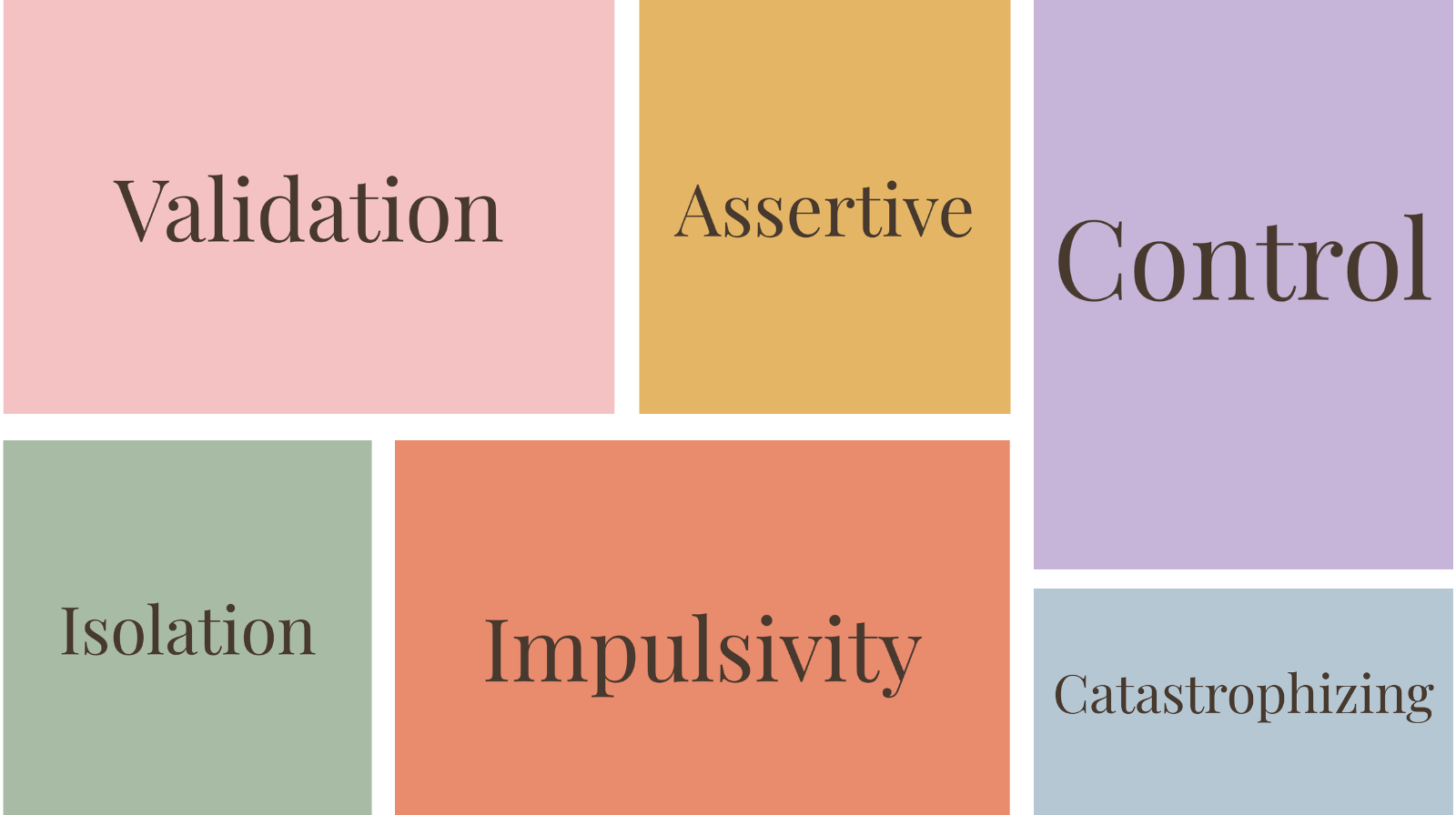
DistressRx™ reframes common stress responses—such as control, urgency, withdrawal, reassurance-seeking, impulsivity, and catastrophizing—not as personality flaws, but as predictable nervous system adaptations under pressure.
This framework provides a shared, non-pathologizing language that allows teams to:
Understand why breakdowns occur under stress
Identify patterned escalation loops without blame
Shift from reactive interpretation to informed response
Repair faster by addressing state, not intent
At the core of DistressRx™ is a simple but powerful premise:
Stress changes how people think, relate, and decide—before it changes what they say or do.
By mapping these stress patterns at the individual and relational level, teams gain clarity without exposure and insight without emotional overload.
From Individual Insight to Team Repair
Within this workshop, DistressRx™ is used to help each participant identify their Stress Signature, including:
A dominant stress response pattern
Secondary patterns that stabilize or amplify stress
How their pattern shifts when regulated vs stressed
These insights are then applied through the Relational Stress Matrix, translating individual awareness into practical, team-level repair strategies.
This is what allows the work to remain:
Structured, not emotional
Insightful, not invasive
Applicable immediately in high-stakes environments
Learn More About DistressRx™
DistressRx™ is the foundational methodology behind this workshop and is used across leadership coaching, clinical education, and organizational consulting.
Learn more about the DistressRx™ framework and assessment tools:
The Core Framework
Teams are guided through a shared language that explains:
How stress activates predictable nervous system patterns
Why good intent collapses under pressure
How specific stress patterns interact—and misfire—with each other
Why repair fails when pace, pressure, and safety are mismatched
Each participant identifies their Stress Signature, including:
Dominant stress response pattern
Secondary stabilizing or amplifying pattern
From there, teams learn how patterns interact, not personalities.
What Participants Will Learn
Goals:
Avoidance, escalation, rigidity, over-functioning, reassurance-seeking, and catastrophizing are reframed as intelligent protective responses—not character flaws.
Participants will learn:
How their stress pattern shows up on teams
What others experience when that pattern is stressed
What helps them regulate faster under pressure
How to signal needs without defensiveness
The Relationship Matrix:
Team Repair in Action
The core of the workshop introduces the Relational Stress Matrix, a practical tool that maps how two nervous systems interact across four states:
Stressed × Stressed
Regulated × Regulated
One Stressed × One Regulated
One Regulated × One Stressed
Rather than blaming individuals, the matrix:
Explains escalation loops
Normalizes misattunement
Identifies precise repair points
This allows teams to move from “Who’s the problem?” to “What’s the pattern?”
Guided Teams Repair Process

Example
Teams are led through a structured, facilitated repair conversation using a clear framework:
“When I’m under stress, my pattern is ___.”
“What often gets misunderstood is ___.”
“What helps me regulate faster is ___.”
“What I’m working on is ___.”
No rebuttals. No correcting. No problem-solving.
This creates immediate safety while restoring clarity and mutual respect.
Outcomes Teams Can Expect
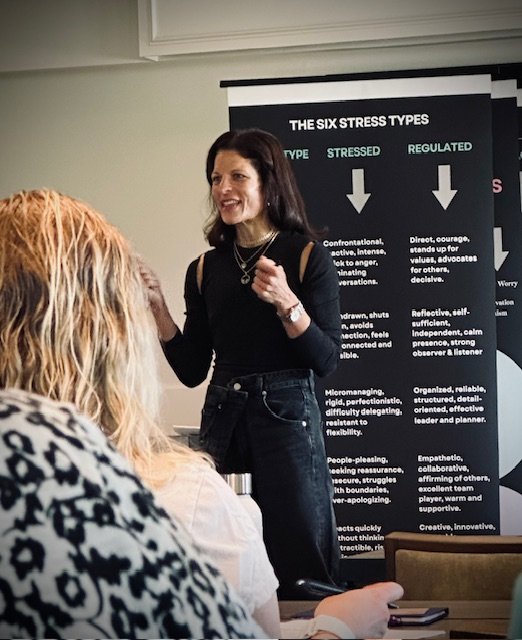
Results:
After the workshop, teams consistently report:
Reduced emotional reactivity
Faster repair after conflict
Clearer communication under pressure
Less interpersonal exhaustion
Improved trust without oversharing
Leaders experience:
Reduced emotional labor
Stronger containment without micromanagement
Increased psychological safety with maintained authority

Team Repair
The Science of Team Repair
The goal of our workshop is faster repair with less damage.
When teams understand how stress shapes interaction, accountability becomes humane, leadership becomes stabilizing, and trust becomes sustainable.
Relational Stress Mapping gives teams the language—and the pathway—to repair without blame and move forward with clarity.
Formats

Options
90-Minute Intensive
High-Impact Reset for Intact Teams
Best for teams who:
Are fundamentally healthy and high-functioning
Trust each other but feel pressure building
Want a shared language before stress causes rupture
Need a reset, not repair
Are short on time but high on accountability
Common scenarios:
Leadership teams entering a high-stakes season
Clinical teams under increased volume or acuity
Newly formed teams wanting a preventative framework
Post-crisis stabilization (before patterns calcify)
What this delivers:
Rapid normalization of stress patterns
Shared language for misattunement
Immediate reduction in reactivity
A clear, lightweight repair framework
This format works because:
It creates alignment without excavation. No one is singled out. No one is exposed. Teams leave clearer, calmer, and better equipped to regulate under pressure.
2-Hour Core Workshop
The Recommended Standard Format
Best for teams who:
Are functioning but feeling relationally stretched
Experience recurring tension or miscommunication
Want understanding and practical repair tools
Are open to reflection without emotional processing
Need something sustainable, not superficial
Common scenarios:
Physician or executive teams with friction but goodwill
Teams noticing emotional fatigue or silos
Groups struggling with pace, urgency, or trust
Leaders carrying disproportionate emotional load
What this delivers:
Individual stress signature mapping
Introduction of the Relational Stress Matrix
Guided team repair language
Clear repair scripts teams can reuse
This format works because:
It balances insight with action. Teams gain self-awareness and a repeatable way to repair without oversharing or blame.
Half-Day Deep Dive (3–4 Hours)
Targeted Repair for Chronic Relational Strain
Best for teams who:
Have unresolved tension that keeps resurfacing
Feel “stuck” in the same communication loops
Are productive but emotionally taxed
Avoid conflict—or escalate quickly when it appears
Need containment, not confrontation
Common scenarios:
Departments with historical fractures
Leadership teams after turnover or restructuring
Clinical teams experiencing burnout-related conflict
Teams where trust has thinned but not collapsed
What this delivers:
Full stress signature integration
Multiple relational matrix walkthroughs
Facilitated repair conversations in contained groups
Explicit repair norms and boundaries
This format works because:
It slows the system enough for real recalibration without overwhelming participants. Patterns can be named, understood, and softened safely.
Full-Day Deep Dive
System-Level Reset for High-Impact Teams
Best for teams who:
Have significant relational fatigue or mistrust
Are functioning operationally but strained interpersonally
Have experienced repeated ruptures or leadership stress
Need time for integration, not just insight
Require visible investment in team health
Common scenarios:
Executive or physician leadership teams in crisis recovery
Organizations post-merger, litigation, or reputational stress
Teams where communication breakdowns affect outcomes
Groups where emotional labor is unevenly distributed
What this delivers:
Deep nervous system education and normalization
Extensive relational mapping across subgroups
Structured repair conversations with facilitation
Clear leadership containment strategies
This format works because:
It creates psychological safety through structure. Teams don’t rush repair — they stabilize it.
2-Day Deep Dive
Relational Reconstruction for Teams Under Chronic Stress
Best for teams who:
Have entrenched conflict or prolonged strain
Are at risk of attrition, disengagement, or fracture
Have lost trust in informal repair attempts
Need cultural reset, not skill-building
Require leadership alignment and shared ownership
Common scenarios:
High-stakes clinical units with sustained burnout
Leadership teams following major rupture or failure
Organizations seeking long-term relational change
Teams where “nothing else has worked”
What this delivers:
Full relational stress mapping across the system
Multiple facilitated repair cycles
Leadership role clarification and containment work
Long-term repair agreements and follow-up structure
This format works because:
It allows the nervous system to fully settle, reorganize, and re-trust. This is not about fixing people — it’s about rebuilding the conditions for safety and collaboration.
The right format isn’t about how much time you spend — it’s about how much strain the system is carrying. These options allow teams to choose the level of support that matches their reality.